
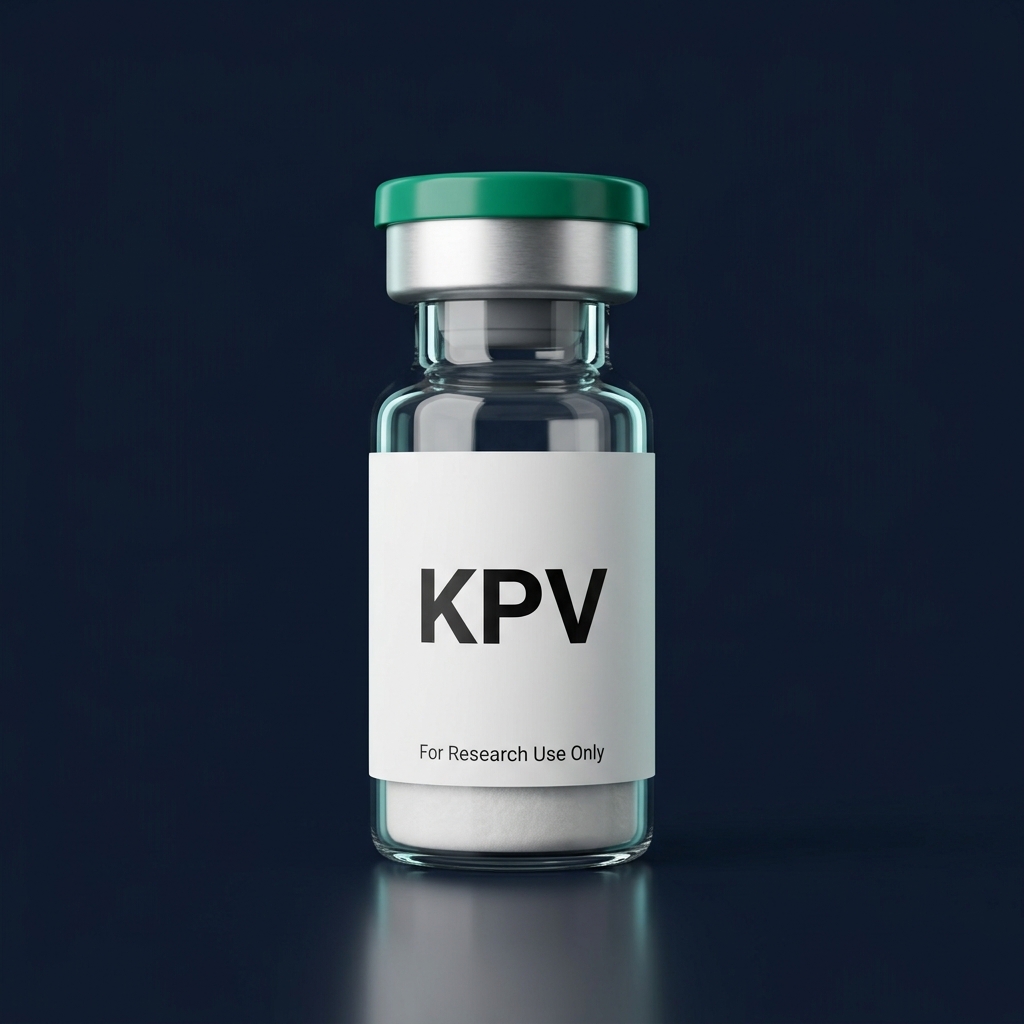

KPV
46.99 €
KPV peptide (Lys-Pro-Val) is the C-terminal tripeptide of alpha-MSH and is investigated in laboratory models involving MC1R, NF-kB, cytokine signaling, and intestinal epithelial biology. Supplied as lyophilized research material to a ≥98% supplier batch purity specification. For laboratory research use only.
| Quantity | Discount | Price |
|---|---|---|
| 3, 4 | 5% off | 44.64 € |
| 5, 9 | 10% off | 42.29 € |
| 10+ Best value | 15% off | 39.94 € |
KPV Peptide – Lys-Pro-Val (Alpha-MSH) Research Peptide
Introduction to KPV Peptide
KPV peptide (Lys-Pro-Val) is a three-amino-acid sequence derived from the C-terminal region of alpha-melanocyte-stimulating hormone (alpha-MSH). Alpha-MSH is a POMC-derived neuropeptide involved in melanocortin signaling and has been investigated across pigmentation, metabolic, and inflammatory research models.
The Lys-Pro-Val sequence has attracted particular research interest because experimental studies indicate that this small fragment retains anti-inflammatory activity associated with the parent peptide. Its minimal three-residue structure also distinguishes it from larger melanocortin peptides when researchers are investigating specific cellular signaling mechanisms.
Certa Peptides supplies KPV as a lyophilized laboratory research material with a ≥98% supplier batch purity specification.
KPV Peptide Research Overview
Research involving KPV peptide has focused substantially on inflammatory signaling. Experimental literature has investigated both melanocortin-receptor-associated activity and effects within epithelial cells.
MC1R, or melanocortin 1 receptor, is one pathway associated with the compound’s experimental activity. Melanocortin receptor signaling can influence intracellular pathways involving cyclic AMP and downstream cellular responses. However, the complete activity of this tripeptide should not be reduced to a single receptor mechanism.
Another important research area involves NF-kB. This transcriptional signaling system regulates numerous genes associated with inflammatory responses. Cell-based experiments have examined whether the Lys-Pro-Val sequence can influence NF-kB activation and downstream production of inflammatory mediators.
Reported experimental endpoints have included cytokines such as IL-6, IL-8, and TNF-alpha. These observations concern controlled laboratory and preclinical models and should not be interpreted as evidence that the peptide treats inflammatory disease in humans.
Intestinal Epithelial Research
KPV has attracted particular interest in intestinal epithelial and experimental colitis models. The intestinal mucosa provides a useful research system for studying interactions among epithelial cells, inflammatory mediators, microbial components, and immune signaling.
Experimental studies have investigated responses triggered by factors such as lipopolysaccharide (LPS) and inflammatory cytokines. This has led researchers to examine the tripeptide in models relevant to intestinal inflammatory pathways.
Its small molecular size has also generated interest in experimental delivery and formulation research. Studies involving intestinal models, including nanoparticle-based systems, can help researchers investigate peptide stability, localization, and epithelial exposure.
Such studies should not be interpreted as evidence supporting oral consumption or treatment of inflammatory bowel disease. Stability and biological activity depend on formulation and experimental conditions, and findings from cell or animal models do not establish clinical efficacy.
KPV is also incorporated into multi-component research formulations. Researchers interested in a broader four-component system can review the Certa Peptides Klow Blend containing BPC-157, GHK-Cu, TB-500 and KPV.
A separate KPV + GHK-Cu 60mg research blend is available for experimental designs investigating the tripeptide alongside a copper-peptide component.
Researchers focusing specifically on the individual compound can review the corresponding Certa Peptides KPV research product.
General chemical and biochemical reference information may also be explored through PubChem. External databases provide general scientific reference information and do not independently verify the purity, identity, or analytical quality of a specific Certa Peptides batch.
Quality & Testing
Certa Peptides supplies KPV as a lyophilized research tripeptide. The documented supplier batch purity specification is ≥98%.
The supplied information also reports an average purity of 99.4% across independently tested lots. This figure represents an average across those tested materials and should not be interpreted as a guaranteed purity value for every vial or batch. Researchers should consult batch-specific analytical documentation where available.
Because the compound contains only three amino-acid residues, it offers a comparatively minimal experimental system for investigating biological activity associated with the C-terminal region of alpha-MSH.
Storage & Handling
The supplied documentation specifies storage at -20°C before laboratory reconstitution. Following reconstitution, the documented storage condition is 2–8°C with use within 28 days.
Researchers should follow the product label, applicable batch documentation, validated experimental protocols, and institutional laboratory procedures when handling or storing the material.
No human reconstitution, dosage, oral-use, injection, administration, supplementation, or treatment instructions are provided.
Frequently Asked Questions
What is KPV peptide?
KPV peptide is the tripeptide Lys-Pro-Val, corresponding to the C-terminal three-amino-acid sequence of alpha-MSH. It is investigated as a research tool for studying inflammatory signaling and melanocortin-associated biology.
How is KPV studied in inflammatory research?
Laboratory models have examined its interactions with melanocortin signaling and intracellular inflammatory pathways, including NF-kB. Experimental endpoints have included changes in inflammatory cytokine signaling in epithelial and immune-related models.
Why is KPV studied in intestinal research models?
The peptide has been investigated in intestinal epithelial and experimental colitis systems because these models provide a controlled way to examine epithelial inflammatory signaling. Its small size has also made it relevant to experimental formulation and delivery research.
How does KPV differ from full alpha-MSH?
Alpha-MSH is a 13-amino-acid melanocortin peptide with biological activity across multiple melanocortin receptors. Lys-Pro-Val represents only its C-terminal tripeptide and provides a smaller experimental tool for studying selected signaling activity associated with this region. The two molecules should not be considered pharmacologically equivalent.
What are the documented purity specifications?
The material has a ≥98% supplier batch purity specification. The supplied information additionally reports a 99.4% average across independently tested lots. Researchers should use batch-specific analytical documentation rather than assuming that an average value applies to every vial.
Is KPV intended to treat inflammatory bowel disease?
No. Research involving intestinal inflammation, colitis, or IBD-related pathways refers to laboratory and preclinical models. Certa Peptides supplies this compound strictly for research and not for treatment, consumption, or personal administration.
Research Use Disclaimer
Research described on this page concerns laboratory and preclinical models. Findings involving MC1R, NF-kB, cytokine signaling, intestinal epithelial biology, experimental colitis, or related inflammatory pathways should not be interpreted as established therapeutic outcomes in humans.
For laboratory research use only. Not for human or veterinary use. Not intended for consumption or for diagnosing, treating, curing, or preventing any disease.
Laboratory Research Use Only.
You must be logged in to post a review.
Related products
BPC-157
Price range: 19.99 € through 109.99 €
BPC-157 + TB-500 Blend
Price range: 41.99 € through 131.99 €
Reviews
There are no reviews yet.