
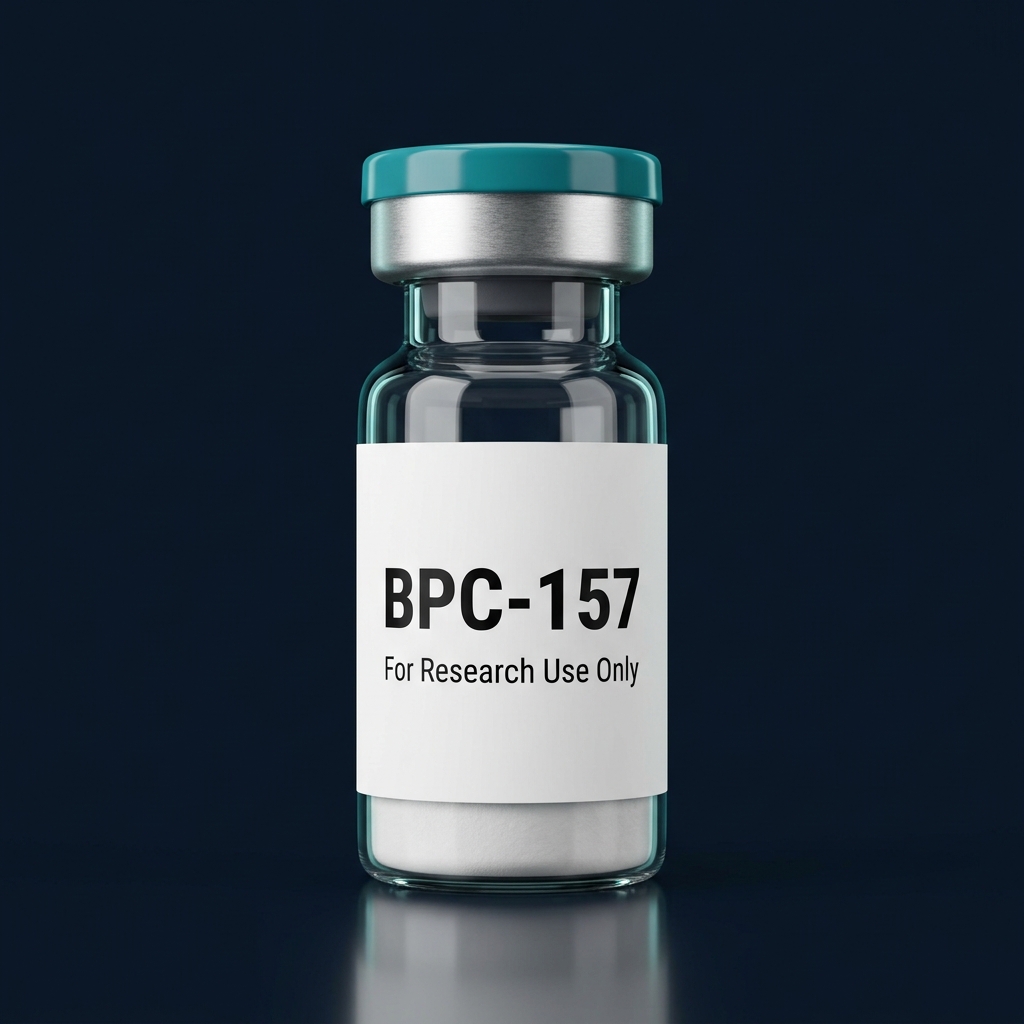
BPC-157
Price range: 19.99 € through 109.99 €
BPC-157 is a synthetic 15-amino-acid research peptide investigated in preclinical gastrointestinal, fibroblast, vascular, and nitric-oxide signaling models. Supplied as lyophilized acetate material in 2mg, 5mg, 10mg, and 20mg sizes to a ≥98% supplier batch purity specification. For laboratory research use only.
| Quantity | Discount | Price |
|---|---|---|
| 3, 4 | 5% off | 18.99 € |
| 5, 9 | 10% off | 17.99 € |
| 10+ Best value | 15% off | 16.99 € |
BPC-157 – Pentadecapeptide Research Compound
Introduction to BPC-157
BPC-157 is a synthetic pentadecapeptide consisting of 15 amino acids with the sequence Gly-Glu-Pro-Pro-Pro-Gly-Lys-Pro-Ala-Asp-Asp-Ala-Gly-Leu-Val. It has been investigated primarily in laboratory and animal models involving gastrointestinal tissue, fibroblasts, vascular signaling, nitric-oxide pathways, and musculoskeletal tissue responses.
The supplied material is the acetate form and is available as lyophilized powder in 2mg, 5mg, 10mg, and 20mg sizes. Documented specifications include CAS 137525-51-0, molecular formula C62H98N16O22, molecular weight 1419.53 g/mol, and a ≥98% supplier batch purity specification.
Certa Peptides supplies this material exclusively for controlled laboratory research.
BPC-157 Research Overview
Published research on BPC-157 is predominantly preclinical. Animal models and cell-culture experiments have investigated several biological pathways, but these findings do not establish safety, efficacy, or therapeutic benefit in humans.
One significant research area concerns nitric-oxide signaling. A review by Sikiric and colleagues examined interactions between the peptide and nitric-oxide-system modulators across gastrointestinal and vascular experimental models. Researchers can review the cited PubMed record PMID 23755725 for the published study context.
Fibroblast research provides another experimental area. Chang and colleagues reported that exposure was associated with changes in growth hormone receptor expression in cultured rat Achilles tendon fibroblasts compared with controls. The experimental details are available through PubMed PMID 25415472.
Musculoskeletal and Cell-Culture Models
Rodent musculoskeletal models have also been used to investigate this pentadecapeptide. Krivic and colleagues reported differences in functional measurements in a rat Achilles tendon-to-bone transection experiment. The corresponding publication can be reviewed through PubMed PMID 18594781.
Staresinic and colleagues investigated experimental outcomes in a rat transected-quadriceps model. Researchers can consult PubMed PMID 16609979 for the study methodology and reported observations.
These experiments are useful for understanding potential mechanisms and generating research hypotheses. They should not be described as evidence that the peptide heals injuries, accelerates recovery, or produces equivalent outcomes in humans.
Gastrointestinal and Vascular Research
Gastrointestinal models are another prominent part of the published preclinical literature. Experimental studies have investigated gastric and intestinal tissue responses alongside nitric-oxide and vascular signaling.
The peptide has also been studied in endothelial and angiogenesis-related experimental systems, including pathways associated with VEGFR2. These areas help distinguish its research profile from peptides investigated primarily through cytoskeletal or actin-associated mechanisms.
Researchers can review the originally supplied Certa Peptides BPC-157 research product reference for additional product context.
BPC-157 and TB-500 Research
BPC-157 and TB-500 appear in overlapping preclinical research categories but are structurally and mechanistically different compounds.
The former is a 15-amino-acid peptide investigated in gastrointestinal, vascular, nitric-oxide, and fibroblast models. TB-500 is associated with thymosin beta-4 research involving actin dynamics, cytoskeletal organization, and cellular migration.
For experimental designs examining both pathways simultaneously, researchers can review the Certa Peptides BPC-157 + TB-500 research blend.
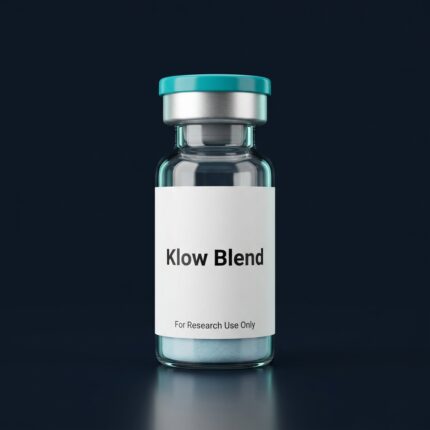
More complex multi-component formulations include the Glow Blend containing BPC-157, GHK-Cu and TB-500 and the Klow Blend containing BPC-157, GHK-Cu, TB-500 and KPV.
Individual compounds remain preferable when an experimental design requires isolation of a specific pathway or component response. Combination formulations may instead be useful for studies explicitly designed to investigate interactions among multiple research compounds.
General chemical reference information may also be explored through PubChem. External databases provide scientific reference information and do not independently verify the purity, identity, or quality of a particular Certa Peptides batch.
Quality & Testing
The product is supplied as lyophilized BPC-157 acetate to a documented ≥98% supplier batch purity specification.
Selected lots are independently analyzed by Janoshik Analytical. Where available, independent reports can be searched by batch code using the supplied Certa Peptides batch verification resource.
Independent results from a selected lot should not be interpreted as confirmation of the analytical characteristics of every vial or production batch. Researchers should consult the documentation associated with the specific batch being used.
The product is sold and shipped from the EU by CERTALAB S.R.L., according to the supplied product information.
Storage & Handling
The supplied documentation specifies storage of unopened lyophilized vials at -20°C, with 2–8°C stated for short-term storage. Following laboratory reconstitution, the documented storage condition is 2–8°C with use within four weeks. The supplied documentation states not to freeze after reconstitution.
Researchers should follow the product label, batch documentation, validated experimental procedures, and institutional laboratory requirements when storing or handling the material.
No human reconstitution, dosage, injection, oral-use, administration, supplementation, or treatment instructions are provided.
Frequently Asked Questions
What is BPC-157?
BPC-157 is a synthetic 15-amino-acid peptide used as an experimental research compound. Published literature includes animal and cell-culture investigations involving gastrointestinal tissue, fibroblasts, vascular signaling, nitric-oxide pathways, and musculoskeletal models.
What is the amino-acid sequence?
The documented sequence is Gly-Glu-Pro-Pro-Pro-Gly-Lys-Pro-Ala-Asp-Asp-Ala-Gly-Leu-Val. The product is supplied as the acetate form rather than an arginate/PDA form.
How does BPC-157 differ from TB-500?
They are structurally distinct peptides associated with different experimental mechanisms. BPC-157 literature includes gastrointestinal and nitric-oxide-associated models, while TB-500 research is associated more closely with thymosin beta-4 biology, actin dynamics, and cell migration. Neither should be treated as a substitute for the other in controlled experiments.
What product sizes are available?
The supplied product specifications list 2mg, 5mg, 10mg, and 20mg formats. The material is provided as lyophilized powder for laboratory research.
What is the documented purity specification?
The supplier batch specification is ≥98%. Selected lots undergo independent analytical testing, but researchers should consult batch-specific documentation rather than assuming that results from one lot apply to all material.
Is BPC-157 approved for human use?
No. The research described here concerns in-vitro and preclinical models. The compound is not supplied by Certa Peptides for human or veterinary use, consumption, injection, supplementation, or therapeutic purposes.
Research Use Disclaimer
Published findings cited on this page come from laboratory, cell-culture, and animal research. Observations involving gastrointestinal tissue, fibroblasts, nitric-oxide signaling, vascular pathways, tendons, muscles, or other experimental systems should not be interpreted as established clinical outcomes in humans.
For laboratory research use only. Not for human or veterinary use. Not intended for consumption or for diagnosing, treating, curing, or preventing any disease.
Laboratory Research Use Only.
| Size |
2mg ,5mg ,10mg ,20mg |
|---|
You must be logged in to post a review.
Related products
BPC-157 + TB-500 Blend
Price range: 41.99 € through 131.99 €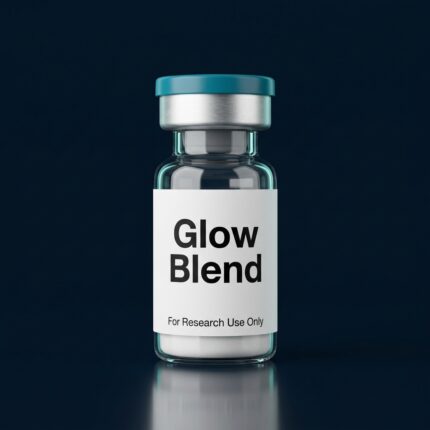
Reviews
There are no reviews yet.