
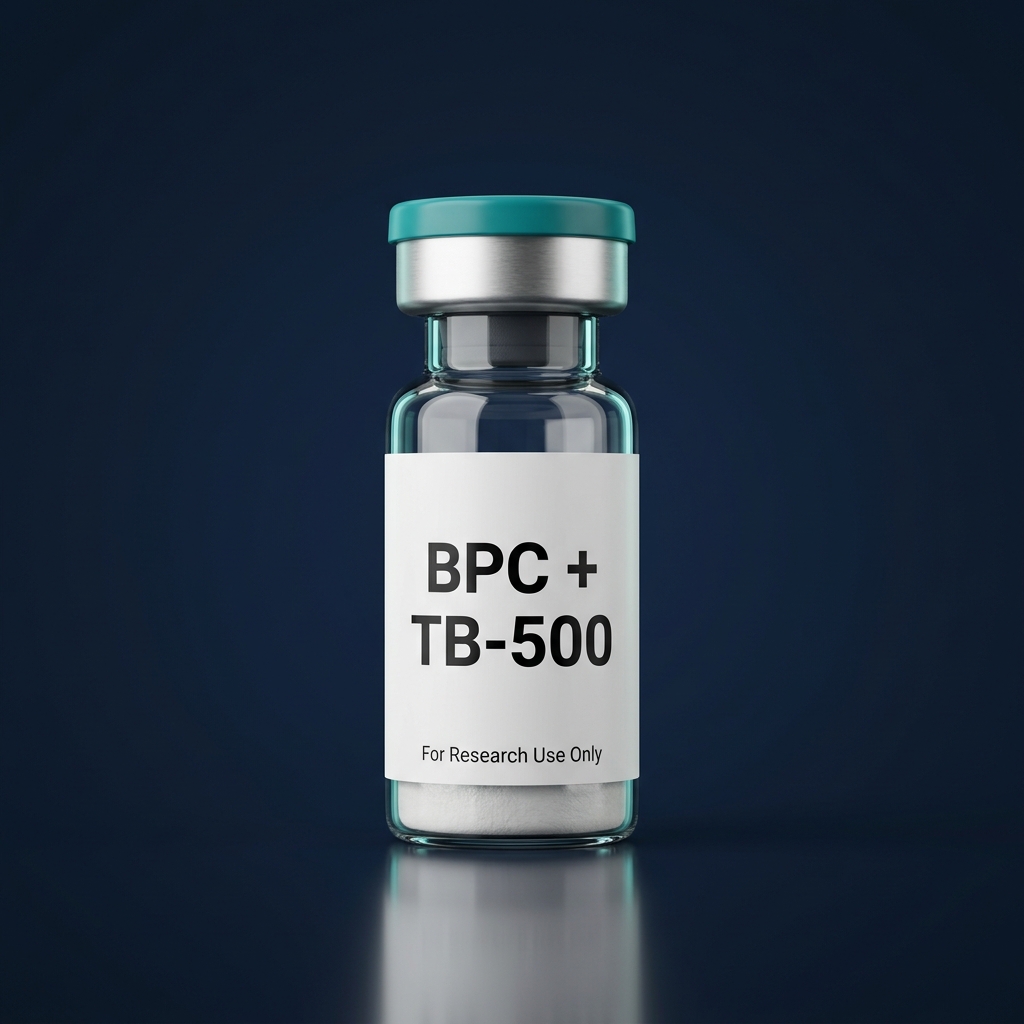
BPC-157 + TB-500 Blend
Price range: 41.99 € through 131.99 €
BPC 157 TB 500 Blend combines 5mg BPC-157 with 5mg TB-500 in a fixed 1:1 research formulation. The two peptides are studied across complementary nitric oxide, vascular signaling, actin dynamics, cell migration, and tissue-model pathways. Each component is supplied to a ≥98% supplier batch purity specification. For laboratory research use only.
| Quantity | Discount | Price |
|---|---|---|
| 3, 4 | 5% off | 39.89 € |
| 5, 9 | 10% off | 37.79 € |
| 10+ Best value | 15% off | 35.69 € |
BPC 157 TB 500 Blend – 10mg Research Peptide Combination
Introduction to BPC 157 TB 500 Blend
BPC 157 TB 500 Blend is a two-component research formulation containing 5mg BPC-157 and 5mg TB-500, providing 10mg total peptide material per vial. The fixed 1:1 composition is intended for laboratory experiments examining two distinct but potentially complementary peptide-associated pathways within the same experimental system.
BPC-157 is a synthetic 15-amino-acid peptide investigated in gastrointestinal, vascular, nitric oxide, fibroblast, and connective-tissue models. TB-500, supplied here as full-length thymosin beta-4, is a 43-amino-acid peptide studied in actin dynamics, cytoskeletal organization, cell migration, and tissue-remodeling models.
Combining the compounds can support experiments specifically designed to compare individual-component activity with a fixed-ratio combination. Mechanistic complementarity, however, should not be interpreted as evidence that the combination necessarily produces additive or synergistic effects.
BPC 157 TB 500 Blend Research Overview
The principal research rationale for this combination comes from the different molecular pathways associated with its two components.
BPC-157 research has examined nitric oxide-associated signaling, endothelial responses, gastrointestinal mucosal biology, fibroblast activity, and VEGFR2-associated vascular pathways. These mechanisms have been investigated largely in cell-based and animal models.
TB-500 research focuses more strongly on actin biology. Thymosin beta-4 interacts with G-actin and participates in regulation of actin polymerization, cytoskeletal dynamics, and cellular migration. These processes are relevant to experimental models involving fibroblast movement and tissue remodeling.
The originally supplied BPC-157 research product and TB-500 research product provide additional component-specific context.
Fixed-Ratio Combination Research
The 5mg + 5mg composition creates a fixed 1:1 mass ratio. This can simplify experimental handling when the research question specifically concerns simultaneous exposure to both compounds at that ratio.
The same feature creates an important experimental limitation: the concentration of one component cannot be changed independently of the other when working solely from the premixed material.
For mechanistic studies, separate-component controls remain important. Experiments designed to evaluate a combination effect can include BPC-157 alone, TB-500 alone, the combination, and appropriate vehicle controls. This allows researchers to distinguish effects associated with an individual component from those observed under combined experimental conditions.
The Certa Peptides BPC-157 + TB-500 research blend provides the current product reference.
Tissue and Cellular Research Context
Both components have been investigated in experimental tissue-response models, but through different proposed mechanisms.
BPC-157 has a research history involving gastrointestinal mucosa, nitric oxide pathways, endothelial signaling, fibroblasts, and musculoskeletal models. TB-500 has been investigated in cytoskeletal organization, cellular motility, actin sequestration, and tissue-remodeling processes.
Overlap in experimental research categories does not mean that the peptides operate through identical pathways or that combining them produces superior outcomes. Combination effects require direct experimental testing within the relevant model.
References to tendon, muscle, gastrointestinal, vascular, or other tissue models describe preclinical research endpoints and should not be interpreted as evidence of injury recovery, healing, or therapeutic benefit in humans.
Comparison With Multi-Peptide Research Blends
Researchers examining broader multi-component formulations may also compare this two-peptide combination with other Certa Peptides research materials.
The Glow Blend adds GHK-Cu to BPC-157 and TB-500, introducing copper-peptide and extracellular-matrix research pathways.
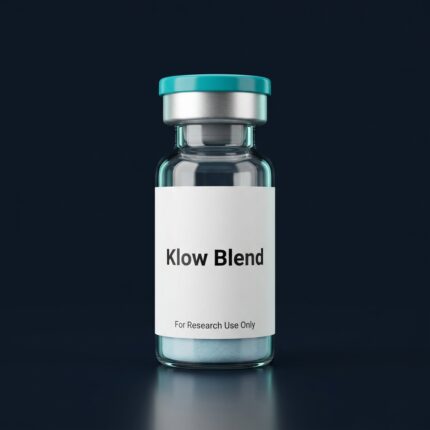
The Klow Blend additionally incorporates KPV, extending the experimental scope toward melanocortin-associated and inflammatory-signaling research.
Increasing the number of components also increases experimental complexity. Individual-component controls and carefully defined study endpoints are therefore especially important when comparing two-, three-, and four-component formulations.
The originally supplied bacteriostatic water laboratory reference provides information about a related laboratory solvent. Researchers should select solvents according to validated experimental protocols and product documentation rather than assuming compatibility for a particular assay.
General compound-reference information may also be explored through PubChem. External scientific databases provide general reference information and do not independently verify the identity, purity, composition, or analytical quality of a specific Certa Peptides batch.
Quality & Testing
The blend contains 5mg BPC-157 and 5mg TB-500 for 10mg total peptide material. Each component is supplied to a ≥98% supplier batch purity specification.
BPC-157 is identified in the supplied specifications by CAS 137525-51-0. TB-500 is described as full-length thymosin beta-4.
The product is supplied as lyophilized material in a single vial. Because this is a combination product, researchers should account for the fixed composition when designing analytical controls, concentration-response experiments, or experiments intended to isolate component-specific mechanisms.
No independent analytical testing information specific to this blend was supplied in the provided material, so batch-specific independent testing should not be inferred.
Storage & Handling
The supplied documentation specifies storage at -20°C before laboratory reconstitution and 2–8°C afterward, with a documented post-reconstitution use period of up to 28 days.
Researchers should follow the product label, batch documentation, validated laboratory procedures, and applicable institutional requirements. Repeated freeze-thaw cycles of prepared laboratory solutions should be avoided where consistent with the validated experimental protocol.
No human reconstitution volumes, concentration calculations, dosage, injection, administration, treatment protocols, or personal-use instructions are provided.
Frequently Asked Questions
What is the BPC 157 TB 500 Blend?
It is a fixed-ratio research formulation containing 5mg BPC-157 and 5mg TB-500, for 10mg total material. The product is designed for laboratory experiments examining the two peptides together.
Why are BPC-157 and TB-500 combined in research?
The research rationale is based on mechanistic complementarity. BPC-157 has been investigated in nitric oxide, vascular, mucosal, and fibroblast-associated pathways, while TB-500 is studied in actin dynamics and cellular migration. Whether their combined effects are additive, synergistic, independent, or model-dependent requires direct experimental investigation.
When are separate BPC-157 and TB-500 materials preferable?
Separate materials are preferable when researchers require independent concentration control, component-specific concentration-response studies, pathway isolation, or individual-compound controls. The premixed formulation fixes both components at a 1:1 mass ratio.
How does this blend differ from Glow Blend?
This formulation contains only BPC-157 and TB-500. Glow Blend adds GHK-Cu, introducing an additional copper-peptide component associated with fibroblast, extracellular-matrix, and related cellular research.
What are the documented product specifications?
Each vial contains BPC-157 5mg and TB-500 5mg, totaling 10mg. Each component is supplied to a ≥98% supplier batch purity specification, and the combined material is provided as lyophilized powder.
Is this peptide blend intended for human use?
No. Certa Peptides supplies the combination strictly for laboratory research. References to tissue repair, tendon models, muscle models, gastrointestinal biology, vascular signaling, or cellular migration describe experimental research contexts and are not healing, performance, medical, or therapeutic claims.
Research Use Disclaimer
Research described on this page concerns laboratory and preclinical models. Findings involving nitric oxide signaling, VEGFR2-associated pathways, gastrointestinal mucosa, fibroblasts, actin dynamics, cell migration, angiogenesis, or tissue-remodeling models should not be interpreted as established healing, injury-recovery, gastrointestinal, musculoskeletal, performance, or therapeutic outcomes in humans.
For laboratory research use only. Not for human or veterinary use. Not intended for consumption or for diagnosing, treating, curing, or preventing any disease.
Laboratory Research Use Only.
| Size |
4mg ,10mg ,20mg |
|---|
You must be logged in to post a review.
Related products
BPC-157
Price range: 19.99 € through 109.99 €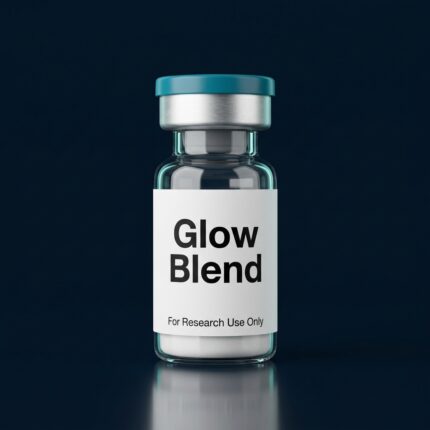
Reviews
There are no reviews yet.