
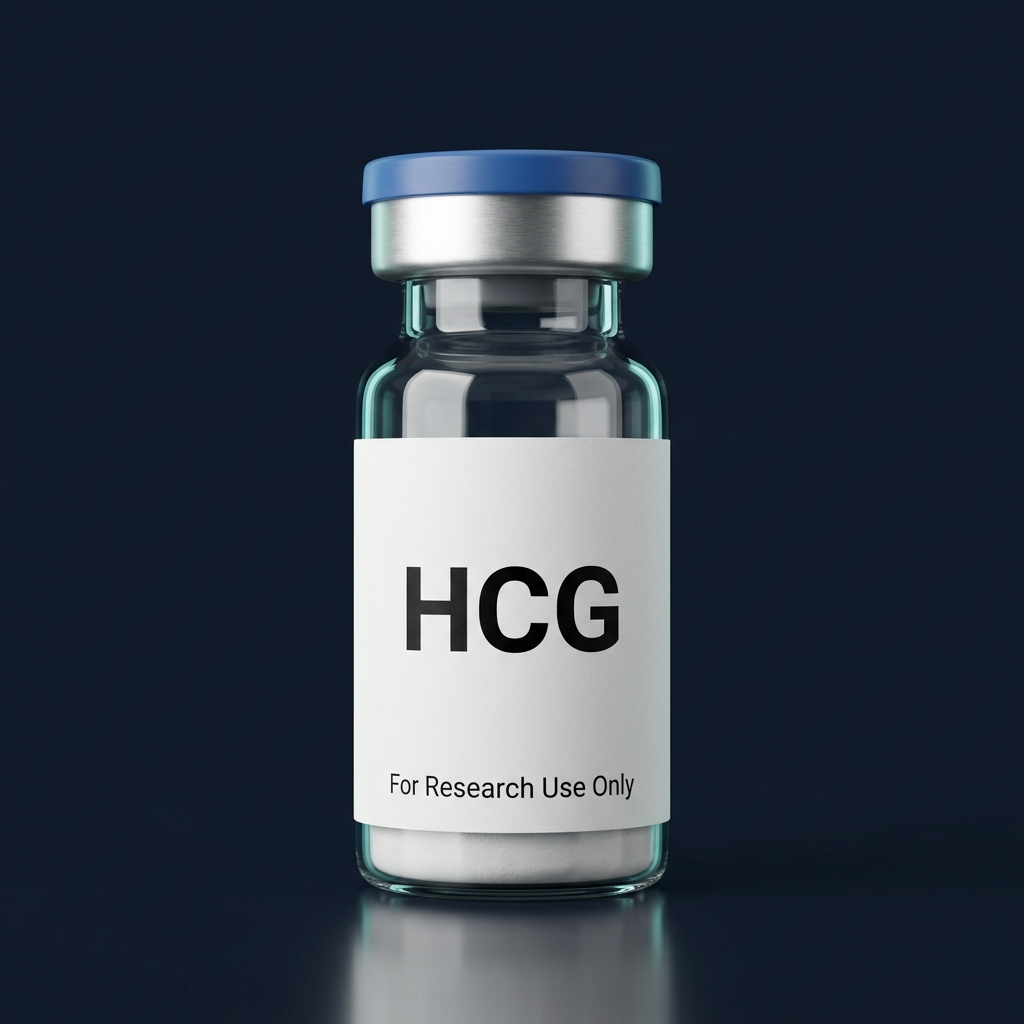
HCG
Price range: 39.99 € through 99.99 €
HCG peptide (human chorionic gonadotropin) is a heterodimeric glycoprotein hormone used in laboratory research on LHCGR signaling, Leydig-cell biology, steroidogenesis, and reproductive endocrinology. Supplied as lyophilized material to a ≥99% biological-activity specification. For laboratory research use only.
| Quantity | Discount | Price |
|---|---|---|
| 3, 4 | 5% off | 37.99 € |
| 5, 9 | 10% off | 35.99 € |
| 10+ Best value | 15% off | 33.99 € |
HCG Peptide – Human Chorionic Gonadotropin Research Material
Introduction to HCG Peptide
HCG peptide, or human chorionic gonadotropin (hCG), is a heterodimeric glycoprotein hormone composed of alpha and beta subunits. The alpha subunit is structurally related to the alpha subunits found in luteinizing hormone (LH), follicle-stimulating hormone (FSH), and thyroid-stimulating hormone (TSH), while the beta subunit provides much of hCG’s distinctive biological identity.
Human chorionic gonadotropin binds the luteinizing hormone/choriogonadotropin receptor (LHCGR), making it an important laboratory tool for investigating reproductive endocrinology, gonadal signaling, Leydig-cell biology, steroidogenesis, and related hormone-receptor pathways.
Certa Peptides supplies the material as lyophilized powder to a ≥99% biological-activity specification for controlled laboratory research.
HCG Peptide Research Overview
Endogenous hCG is associated primarily with early pregnancy biology. Following implantation, trophoblast-derived cells produce the hormone, which participates in signaling to the corpus luteum and supports progesterone-associated endocrine processes during early pregnancy.
The presence of hCG in biological samples also provides the biochemical basis for pregnancy-testing assays. However, diagnostic interpretation of quantitative or qualitative hCG measurements is outside the purpose of this research-product page.
In experimental endocrinology, the compound is studied because hCG and LH activate the same receptor. This allows researchers to investigate LHCGR signaling without relying solely on endogenous pituitary LH.
LHCGR and Leydig-Cell Research
LHCGR is expressed on Leydig cells in the testes. Receptor activation initiates intracellular signaling involving G proteins, adenylyl cyclase, cAMP, and downstream pathways associated with steroidogenesis.
Because hCG can activate this receptor, laboratory studies have used it to investigate Leydig-cell responsiveness and testosterone-associated biosynthetic pathways under controlled experimental conditions.
Its pharmacological behavior is not identical to endogenous LH. Differences in glycosylation and clearance contribute to a longer biological persistence, which is relevant when comparing receptor activation and temporal signaling in experimental models.
Statements that the receptor “cannot distinguish” between LH and hCG can oversimplify the biology. Although both activate LHCGR, research indicates that ligand-dependent signaling kinetics and downstream responses can differ. Researchers should therefore treat hCG as an LHCGR agonist rather than assuming complete biological equivalence to LH.
Reproductive and Gonadal Research
Human chorionic gonadotropin has also been used experimentally in reproductive biology, gonadal-development research, ovulatory models, and investigations of gonadotropin signaling.
In male HPG-axis research, direct LHCGR activation allows investigators to study Leydig-cell responses under conditions in which upstream hypothalamic or pituitary signaling is experimentally altered.
This provides a way to separate gonadal responsiveness from some upstream regulatory variables. Such research may involve measurement of receptor signaling, steroidogenic enzymes, cellular responses, or hormone concentrations as experimental endpoints.
References to testosterone production, ovulation, pregnancy biology, or gonadal function describe research contexts. They are not instructions for fertility treatment, hormone restoration, testosterone enhancement, or any other personal use.
hCG Stimulation Research
Experimental stimulation paradigms can use hCG to characterize Leydig-cell responsiveness. The underlying principle is that direct LHCGR activation provides information about downstream gonadal signaling independently of endogenous LH secretion.
Clinical stimulation testing also exists, but specific administration schedules, quantities, sampling intervals, diagnostic thresholds, and interpretation protocols are deliberately not provided here. Those procedures belong to appropriately controlled clinical or institutional settings rather than a research-product description.
Researchers interested in a distinct endocrine research peptide can also review Certa Peptides Tesamorelin. Tesamorelin acts through a different receptor system and should not be considered mechanistically interchangeable with gonadotropin research materials.
The current Certa Peptides hCG research product provides the corresponding product-specific reference.
General biochemical reference information may also be explored through PubChem. External databases provide general scientific information and do not independently verify the identity, biological activity, composition, or analytical quality of a specific Certa Peptides batch.
Quality & Testing
The supplied specifications identify the product as human chorionic gonadotropin in lyophilized form with a ≥99% biological-activity specification.
For a complex glycoprotein hormone, a biological-activity specification should not automatically be interpreted as equivalent to a conventional chromatographic peptide-purity percentage. Glycoprotein structure, subunit integrity, glycosylation, and biological activity can require different analytical approaches from those used for small synthetic peptides.
No independent analytical laboratory, batch-specific assay result, molecular weight, source material, or manufacturing certification was supplied in the provided information. These details should therefore not be inferred.
Researchers should consult the documentation associated with the specific product lot when additional analytical information is required.
Storage & Handling
The supplied documentation specifies refrigerated storage at 2–8°C for the lyophilized material and 2–8°C following laboratory reconstitution. Repeated freezing should be avoided according to the supplied handling information.
A documented post-reconstitution use period of up to 28 days was also supplied. Researchers should follow the product label, batch documentation, validated laboratory procedures, and applicable institutional requirements when determining experimental stability.
Although bacteriostatic water was identified in the supplied specifications, no human reconstitution volumes, mixing procedure, concentration calculation, injection instructions, administration schedules, or dosing information are provided.
Frequently Asked Questions
What is HCG peptide?
HCG peptide refers here to human chorionic gonadotropin, a glycoprotein hormone consisting of alpha and beta subunits. It is used experimentally to investigate LHCGR signaling and reproductive endocrine biology.
What receptor does human chorionic gonadotropin activate?
The hormone binds the luteinizing hormone/choriogonadotropin receptor, commonly abbreviated LHCGR. This receptor participates in gonadal signaling and steroidogenesis.
Why is hCG studied in Leydig-cell research?
Leydig cells express LHCGR. Experimental activation of this receptor can be used to investigate cAMP-associated signaling, steroidogenic pathways, and cellular responsiveness independently of some upstream hypothalamic-pituitary variables.
Is hCG identical to LH?
No. Both hormones activate LHCGR, but they are distinct glycoproteins with different structural and pharmacokinetic characteristics. Experimental evidence also supports differences in aspects of their signaling behavior, so they should not be described as completely interchangeable.
What are the documented product specifications?
The supplied material is lyophilized human chorionic gonadotropin with a ≥99% biological-activity specification. The documented storage range is 2–8°C before and after laboratory reconstitution.
Is hCG intended for human use?
No. Certa Peptides supplies this material strictly for laboratory research. References to pregnancy biology, Leydig cells, testosterone-associated pathways, ovulatory models, or gonadal signaling describe scientific research contexts and are not fertility, hormone, bodybuilding, or therapeutic claims.
Research Use Disclaimer
Research described on this page concerns laboratory, biochemical, and experimental endocrine models. Findings involving LHCGR, Leydig cells, steroidogenesis, testosterone-associated pathways, gonadotropin signaling, ovulatory models, pregnancy biology, or the HPG axis should not be interpreted as established fertility, testosterone-enhancement, hormone-restoration, reproductive, bodybuilding, or therapeutic outcomes in humans.
For laboratory research use only. Not for human or veterinary use. Not intended for consumption or for diagnosing, treating, curing, or preventing any disease.
Laboratory Research Use Only.
| Size |
2000IU ,5000IU ,10000IU |
|---|
You must be logged in to post a review.
Related products
CJC-1295 + Ipamorelin Blend
Price range: 68.49 € through 107.99 €
CJC-1295 With DAC
Price range: 42.99 € through 59.99 €
CJC-1295 Without DAC
Price range: 29.99 € through 71.99 €
Ipamorelin
Price range: 23.99 € through 65.99 €
Reviews
There are no reviews yet.