
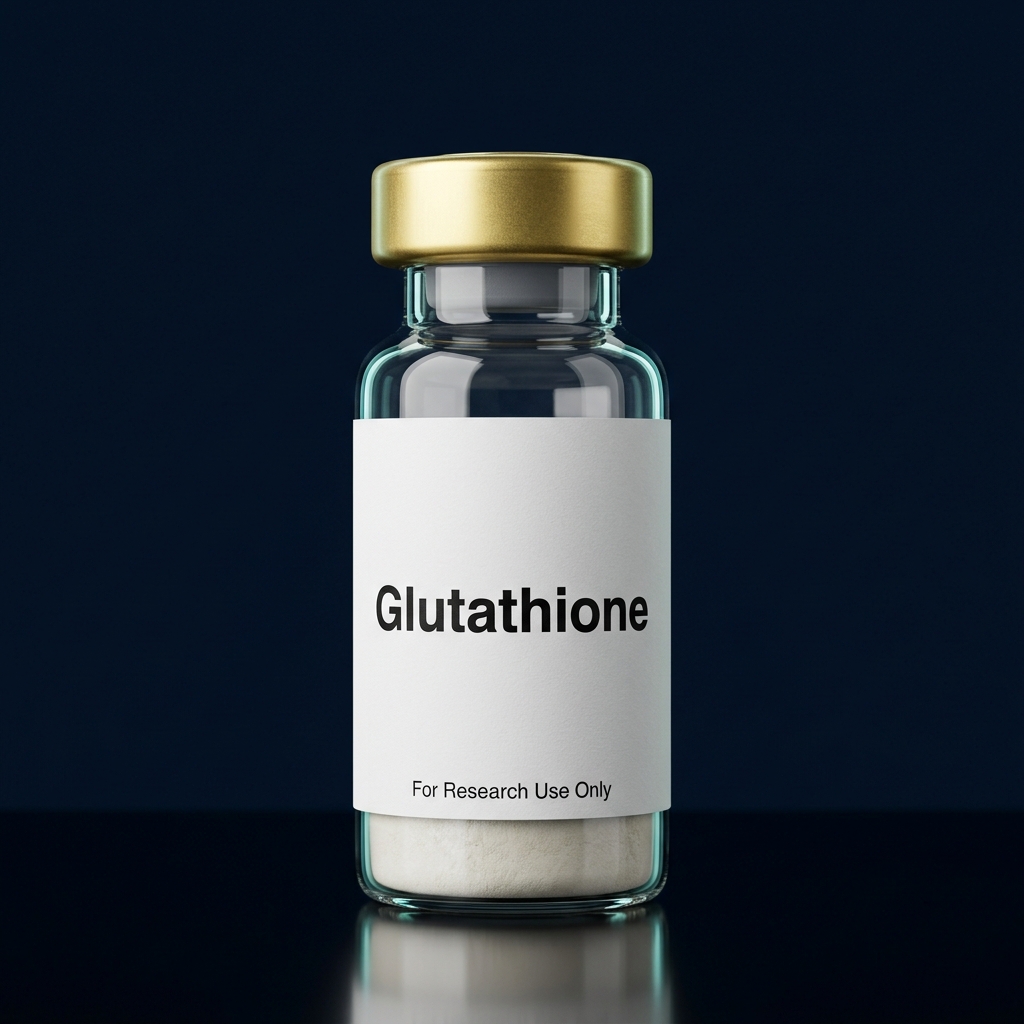
Glutathione 1500mg
43.49 €
Reduced glutathione (GSH) 1500mg is a tripeptide research material used to investigate cellular redox balance, oxidative stress, glutathione-dependent enzyme systems, and antioxidant biology. Each vial contains 1,500mg of reduced glutathione supplied as lyophilized powder to a ≥98% supplier batch purity specification. For laboratory research use only.
| Quantity | Discount | Price |
|---|---|---|
| 3, 4 | 5% off | 41.32 € |
| 5, 9 | 10% off | 39.14 € |
| 10+ Best value | 15% off | 36.97 € |
Advantages of Glutathione – Reduced GSH 1500mg
Introduction to the Advantages of Glutathione
The advantages of glutathione as an experimental research compound stem from its central role in cellular redox biology. Glutathione (GSH) is a naturally occurring tripeptide composed of glutamate, cysteine, and glycine and is present at substantial intracellular concentrations across many mammalian cell types.
The reduced form contains a reactive cysteine thiol group that participates in reduction-oxidation reactions. This makes GSH an important experimental molecule for studying oxidative stress, reactive oxygen species, protein thiol status, detoxification pathways, and glutathione-dependent enzyme systems.
Certa Peptides supplies 1,500mg of reduced glutathione per vial as lyophilized powder with a ≥98% supplier batch purity specification.
Advantages of Glutathione in Redox Research
One of the primary advantages of glutathione in laboratory research is its participation in the GSH/GSSG redox cycle. Reduced GSH can donate reducing equivalents during reactions involving oxidants and subsequently form oxidized glutathione, or GSSG.
Glutathione reductase can convert GSSG back to reduced GSH using NADPH. Researchers therefore frequently examine the relationship between reduced and oxidized glutathione when investigating cellular redox status. The GSH/GSSG ratio is commonly used experimentally as an indicator of shifts in oxidative conditions.
Another of the advantages of glutathione for biochemical research is its relationship with glutathione peroxidase enzymes. These enzymes use GSH as a reducing substrate during reactions involving peroxides, connecting the peptide directly with experimental studies of antioxidant enzyme systems.
GSH also participates in glutathione S-transferase-associated reactions involving electrophilic compounds. This biochemical role has made glutathione research particularly relevant to experimental toxicology and hepatic metabolism models.
The liver is a major site of GSH synthesis and metabolism. Consequently, researchers investigating oxidative stress, xenobiotic metabolism, and chemically induced cellular stress frequently examine hepatic glutathione concentrations and associated enzyme systems.
The advantages of glutathione as a research tool also extend to mitochondrial biology. Mitochondrial redox balance is closely connected with reactive oxygen species production and antioxidant defense, making GSH-related measurements useful in experimental models examining oxidative changes within cells.
Immune-cell biology represents another area of investigation. Lymphocytes, macrophages, and other immune cells are sensitive to changes in intracellular redox conditions. Experimental manipulation of GSH concentrations has therefore been used to investigate relationships among redox state, cellular signaling, proliferation, and immune-cell function.
These experimental applications should not be interpreted as evidence of health, detoxification, skin, anti-aging, immune, or therapeutic benefits in humans. Certa Peptides supplies this material exclusively for controlled laboratory research.
Quality & Testing
When evaluating the advantages of glutathione for a laboratory protocol, researchers should distinguish the chemical form being investigated. This product contains reduced L-glutathione, commonly abbreviated GSH, rather than oxidized glutathione (GSSG).
Each vial contains 1,500mg of reduced GSH supplied as lyophilized powder. The documented supplier batch purity specification is ≥98%, and the supplied CAS number is 70-18-8.
The material consists of the tripeptide gamma-glutamyl-cysteinyl-glycine. Researchers should review available product and batch documentation when determining whether its documented characteristics satisfy the requirements of a particular experimental protocol.
Storage & Handling
Maintaining appropriate storage conditions is important when studying the advantages of glutathione in controlled experiments because reduced GSH is susceptible to oxidation.
The supplied product specification states that the material should be stored at -20°C in a sealed container and protected from oxygen, moisture, and light. Laboratory handling should minimize unnecessary environmental exposure, particularly after opening or weighing the material.
Researchers should follow the product label, available documentation, validated experimental procedures, and institutional laboratory requirements for storage and handling.
No human dosage, injection, administration, supplementation, or treatment instructions are provided.
Frequently Asked Questions
What are the advantages of glutathione in laboratory research?
The advantages of glutathione include its usefulness for investigating cellular redox balance, oxidative stress, glutathione-dependent enzymes, xenobiotic metabolism, mitochondrial biology, and redox-sensitive cellular processes. These are experimental applications rather than claims of personal health benefits.
What is reduced glutathione?
Reduced glutathione, abbreviated GSH, is a tripeptide composed of glutamate, cysteine, and glycine. Its cysteine thiol group participates in redox reactions and distinguishes reduced GSH from its oxidized disulfide form, GSSG.
Why do researchers measure the GSH/GSSG ratio?
One of the advantages of glutathione research is the ability to examine changes between reduced GSH and oxidized GSSG. The balance between these forms can provide information about cellular redox conditions and oxidative stress within an experimental model.
Why is glutathione studied in liver models?
The liver has a major role in glutathione synthesis, metabolism, and export. Hepatic GSH also participates in reactions involving reactive metabolites and glutathione S-transferases, making it an important variable in experimental toxicology and liver-cell research.
What are the documented product specifications?
The material contains 1,500mg of reduced glutathione (GSH) per vial and is supplied as lyophilized powder. The documented supplier batch purity specification is ≥98%, and the supplied CAS number is 70-18-8.
Is reduced GSH intended for human supplementation?
No. Discussion of the advantages of glutathione on this page concerns laboratory and biochemical research only. Certa Peptides does not supply this material as a dietary supplement, injectable product, cosmetic product, or material for human or veterinary administration.
Research Use Disclaimer
Research into the advantages of glutathione concerns experimental biochemical and cellular models and should not be interpreted as evidence of clinical or personal health benefits.
For laboratory research use only. Not for human or veterinary use. Not intended for consumption or for diagnosing, treating, curing, or preventing any disease.
Laboratory Research Use Only.
You must be logged in to post a review.
Related products
Reviews
There are no reviews yet.